On Memory, War and Photography
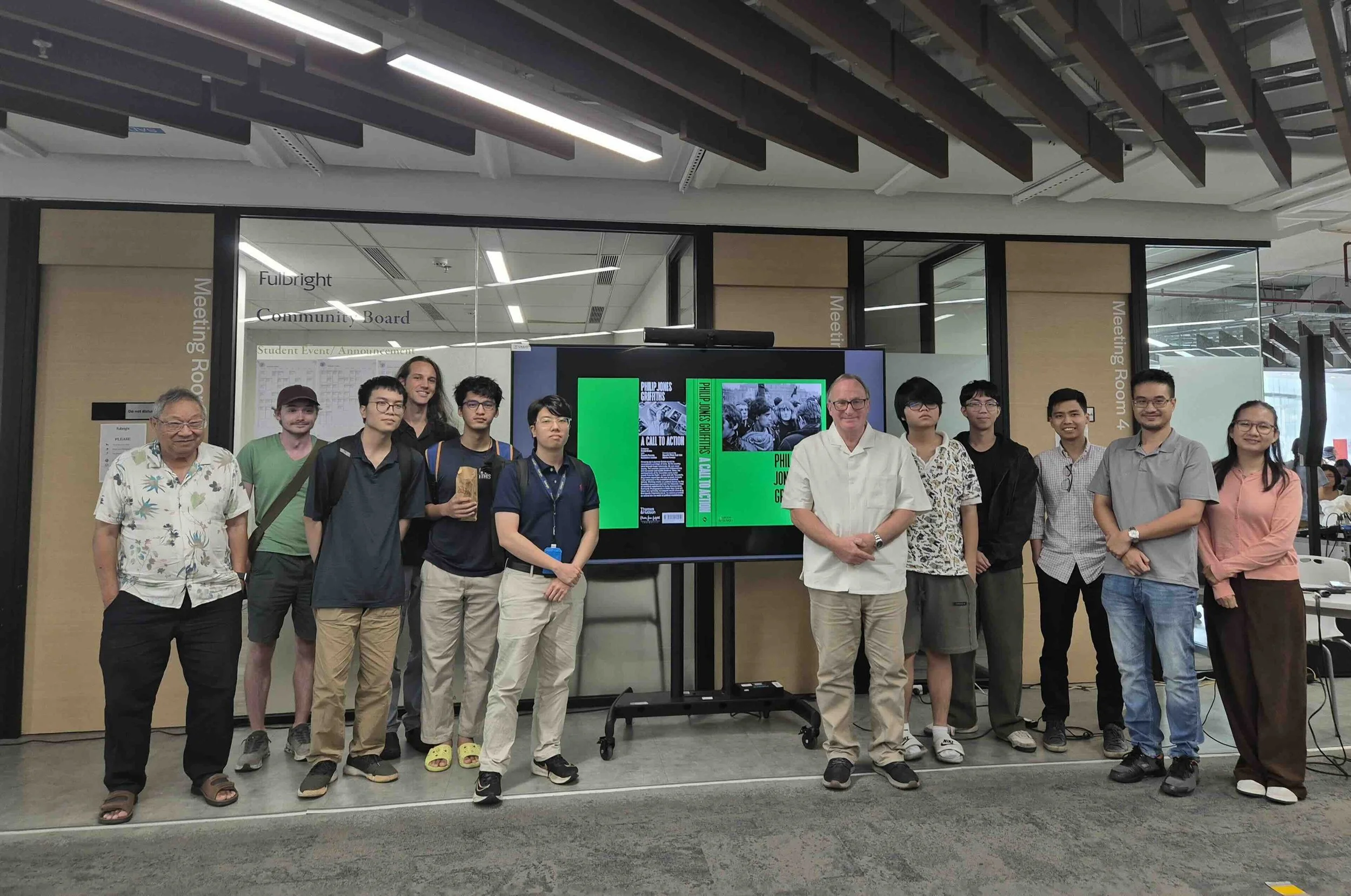
With some of the students at Fulbright University, Ho Chi Minh City, 8 January 2026
In early January this year, I gave a talk about my forthcoming Philip Jones Griffiths book to students at Fulbright University, Ho Chi Minh City, Vietnam. It seemed fitting that my first speaking engagement about the Welsh photographer was in Vietnam, given that a third of the book is devoted to Jones Griffiths’ photography in Vietnam from 1966 – 2003.
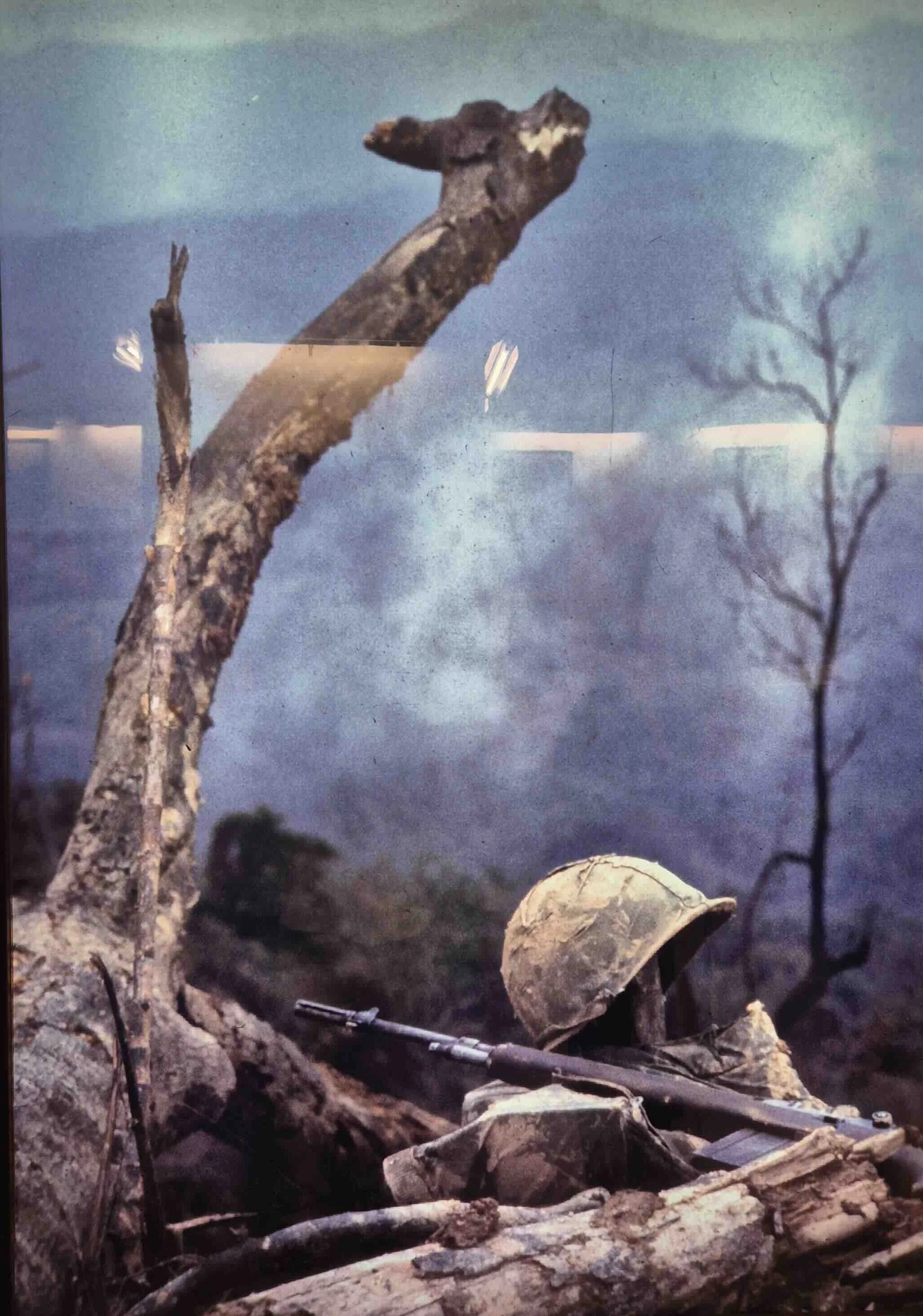
From Jones Griffiths’ perspective, the United States’ military operations in South Vietnam were not designed to liberate the people from a communist threat, they were an imperialist mission to forcefully impose on the Vietnamese an American way of life, rooted in consumer capitalism, “its values, norms, morals and beliefs – in short, its total ideology”. Vietnam was arguably the first and last war in which photographers had a certain freedom to shape their own narrative to challenge dominant views of right and wrong, expose cowardice and valour, and to counter the bias of television and news reporting which inevitably was supportive of the American war effort.
At the end of my presentation, one of the young Vietnamese students asked me if images of war like these had been created using AI, would we still believe them to be a true representation of events. It was a difficult question, and I’m not sure I was able to give a convincing answer. Photography has never been free from manipulation, and the meaning of images always depends on the context we encounter them and the accompanying narrative. The photographer’s gaze, composition, framing, cropping, re-touching and various aesthetic choices all have a bearing, before you get on to the captions accompanying the images and other curatorial or editorial decisions. In an era of staging and re-staging images, deep fakes and AI-generated content, ‘truth’ in photography is a fragile and highly contested concept.
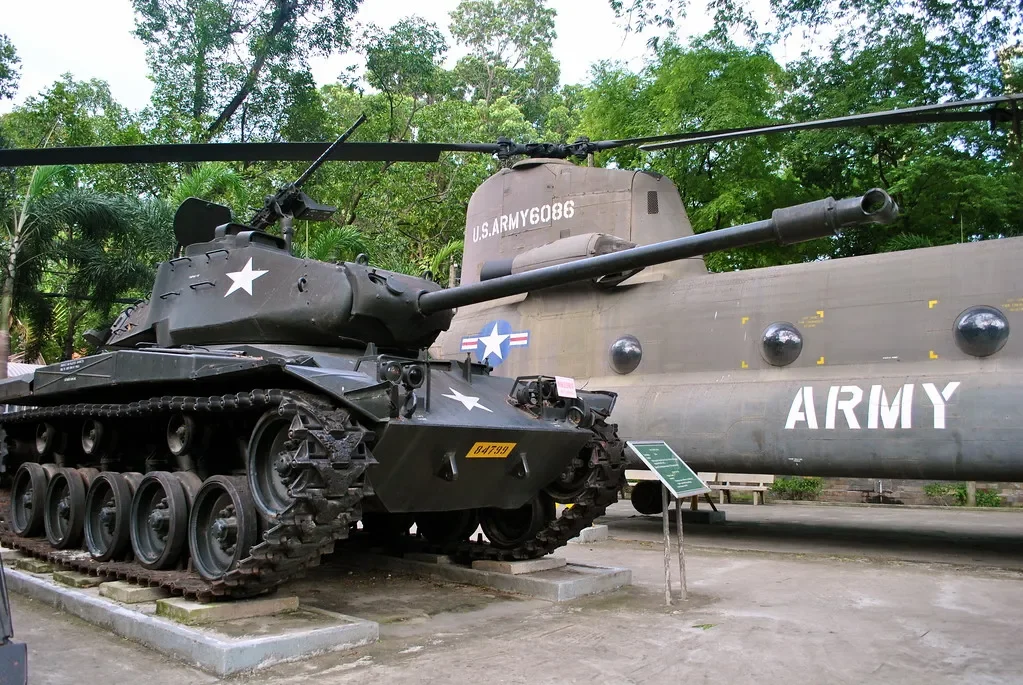
With that in mind, after the presentation we visited the War Remnants Museum which opened in 1975 with the express purpose of “researching, collecting, preserving and displaying evidence of crimes and consequences of the war of aggression against Vietnam, thereby calling for awareness against unjust wars, protecting peace and promoting solidarity between nations”.
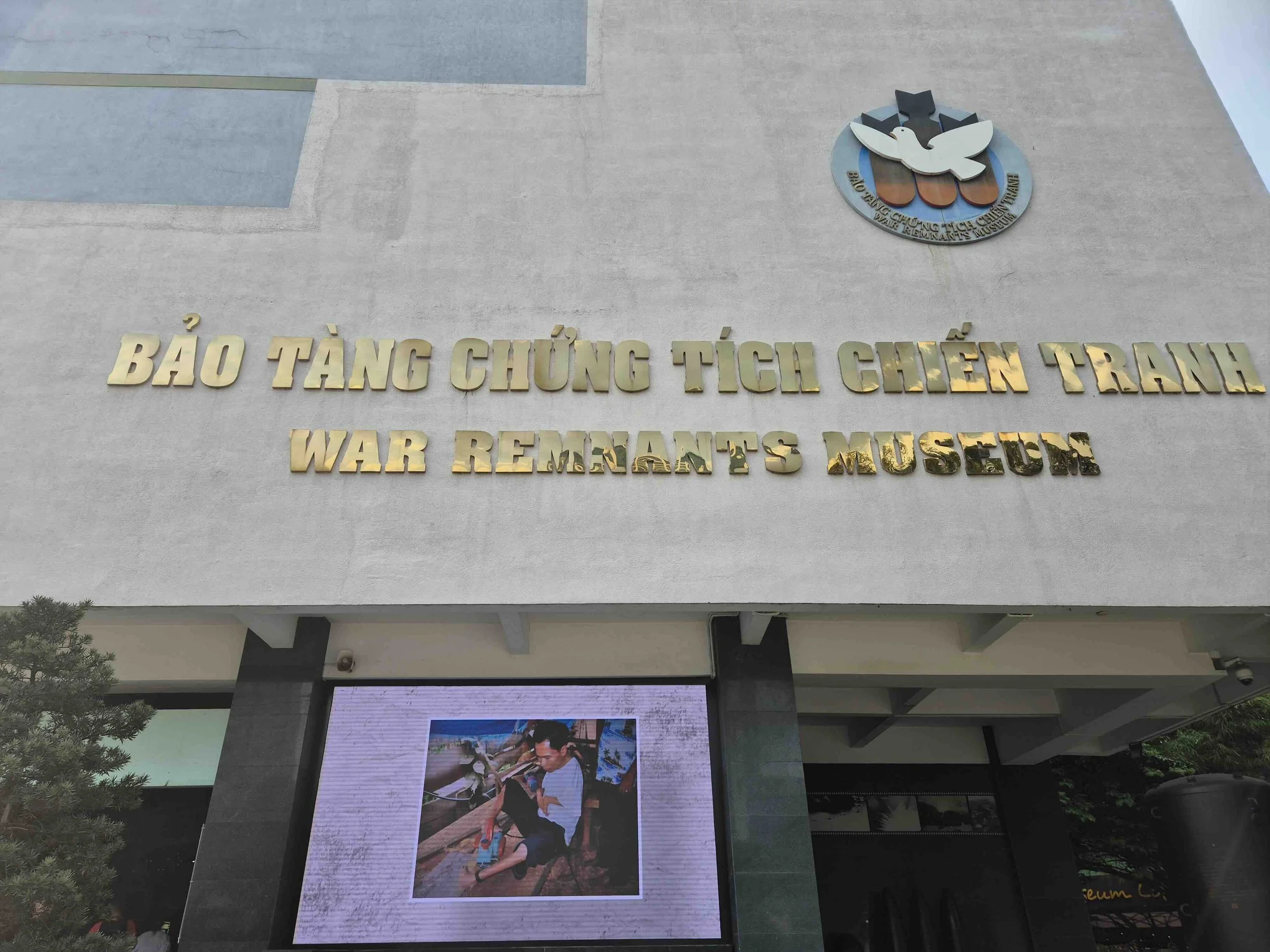
War Remnants Museum entrance
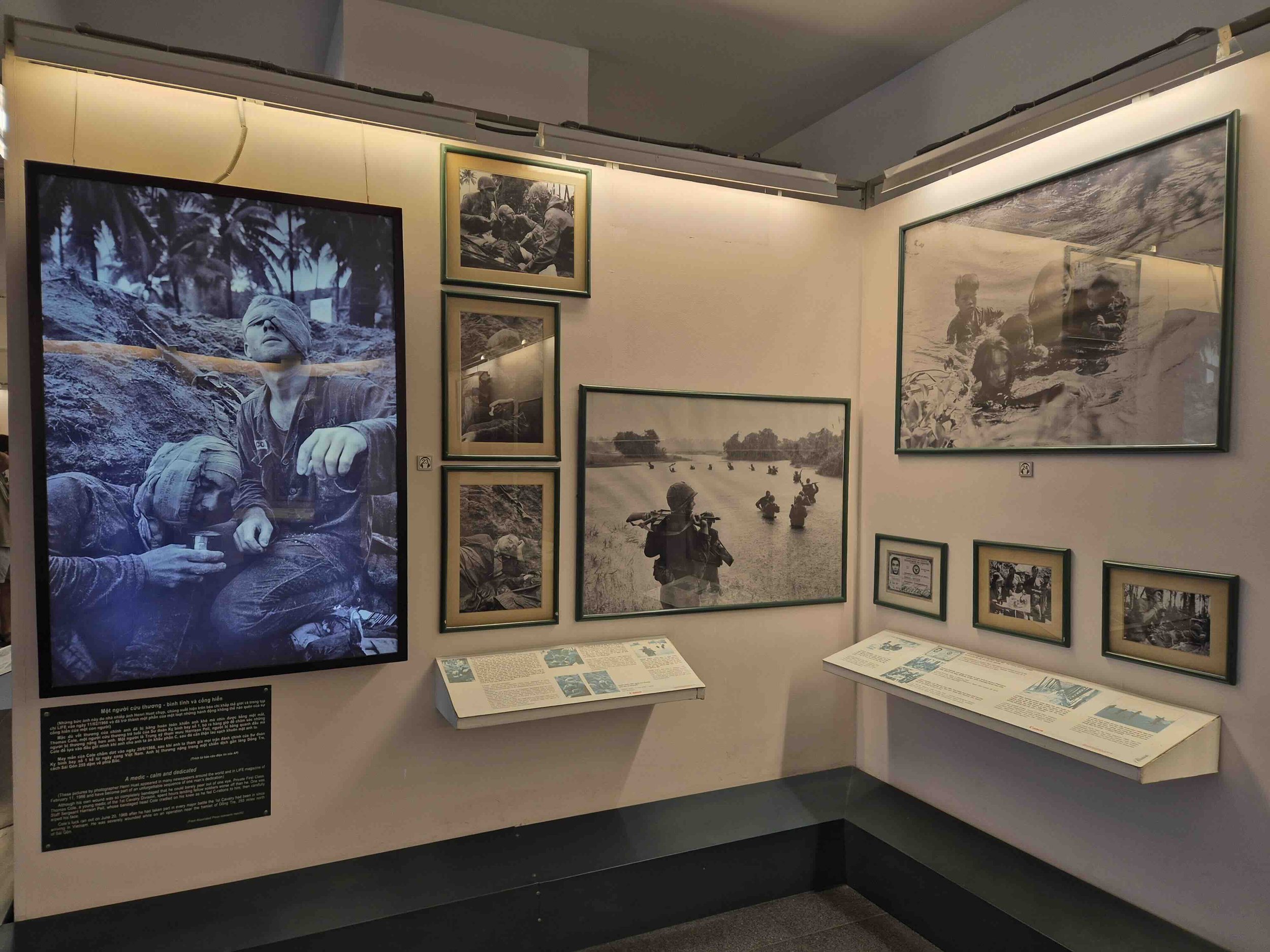
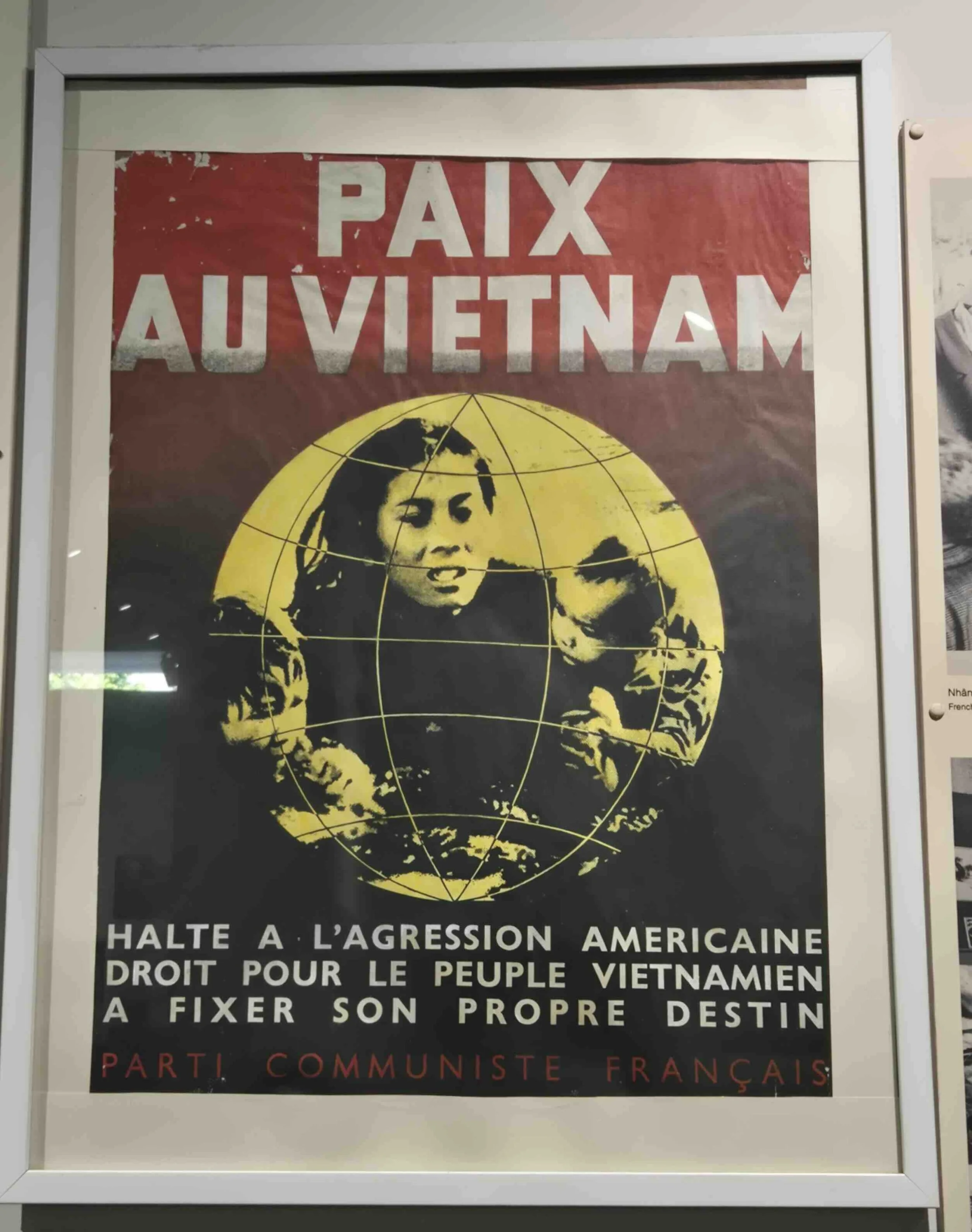
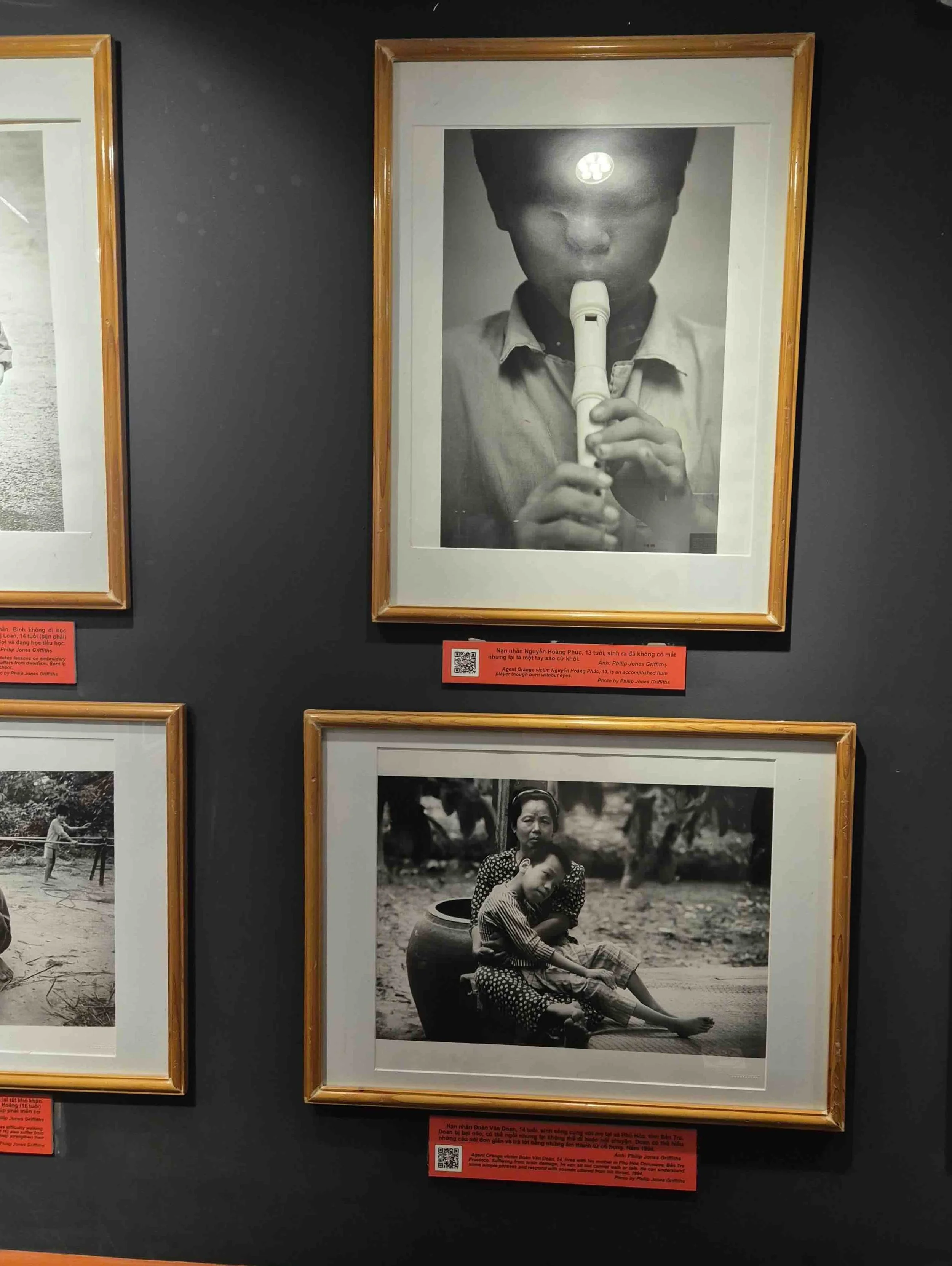
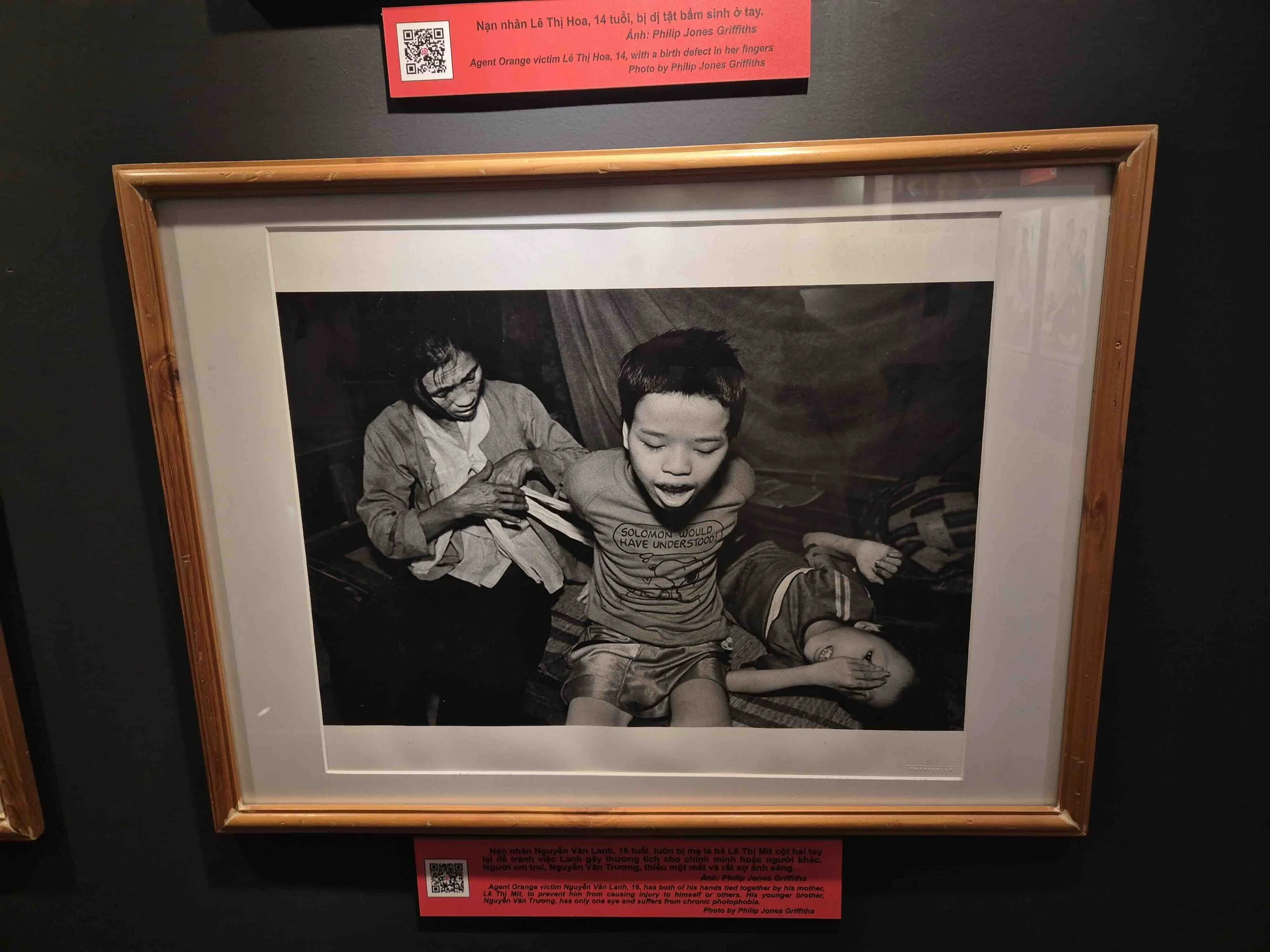
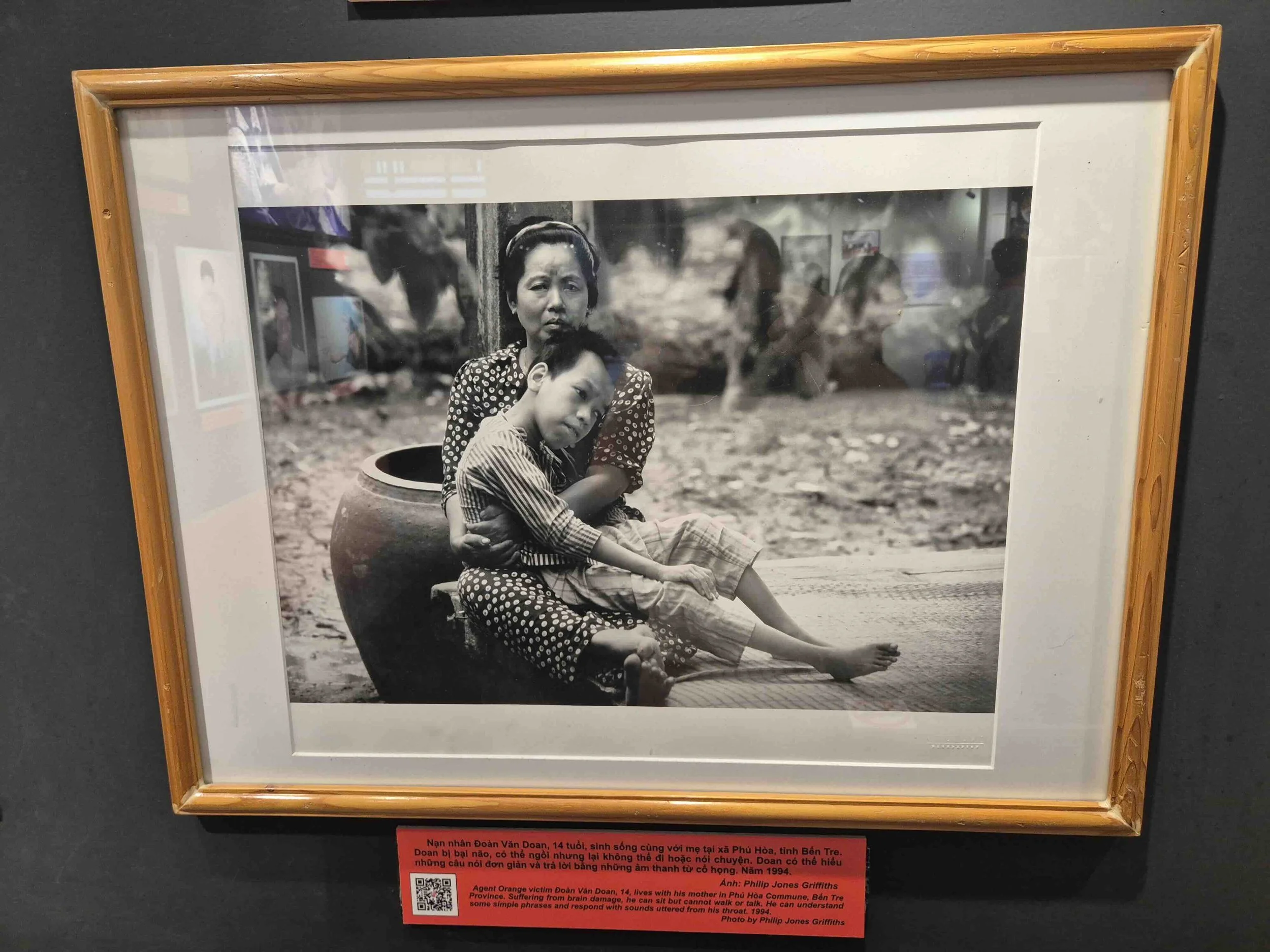
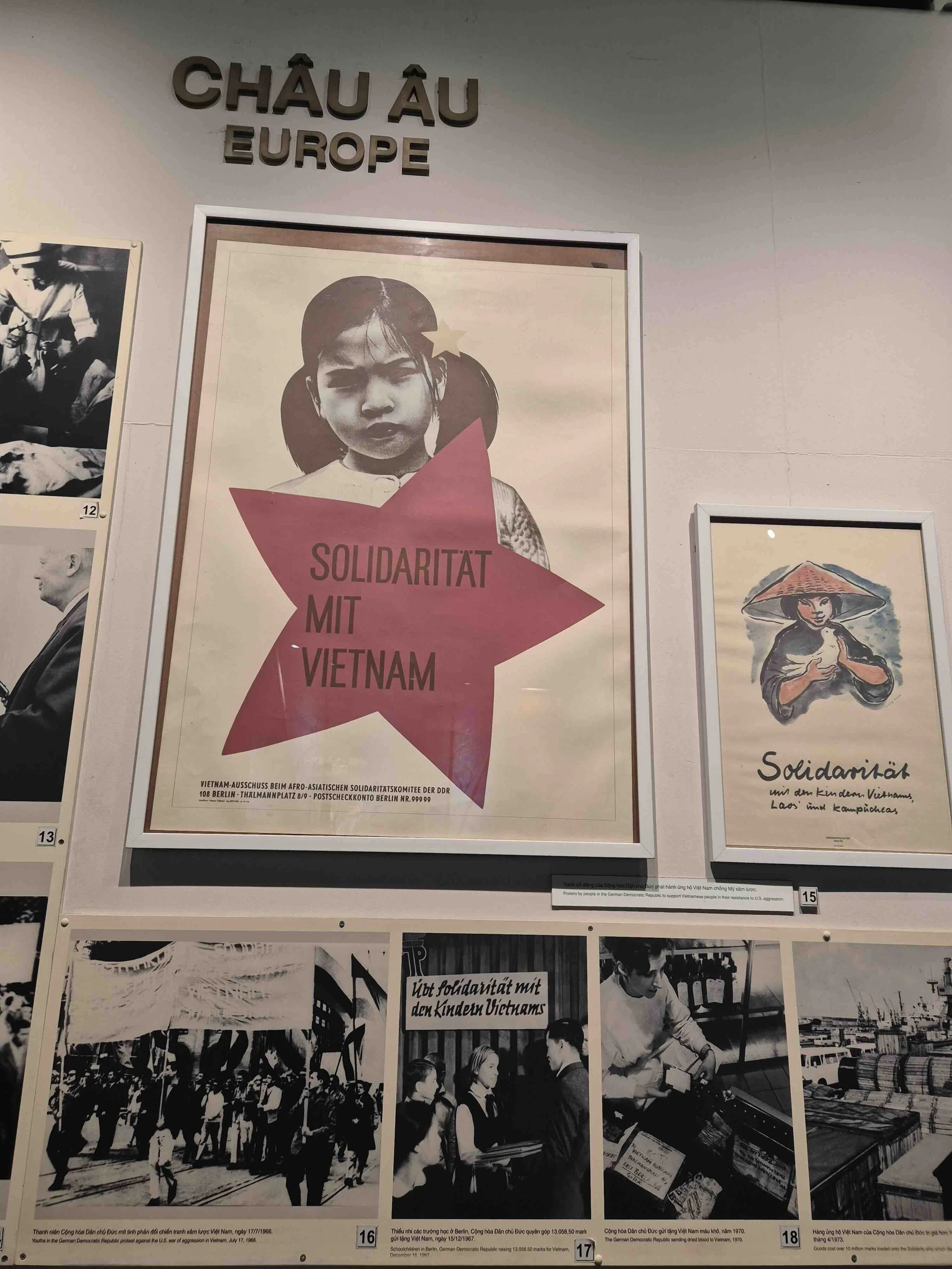
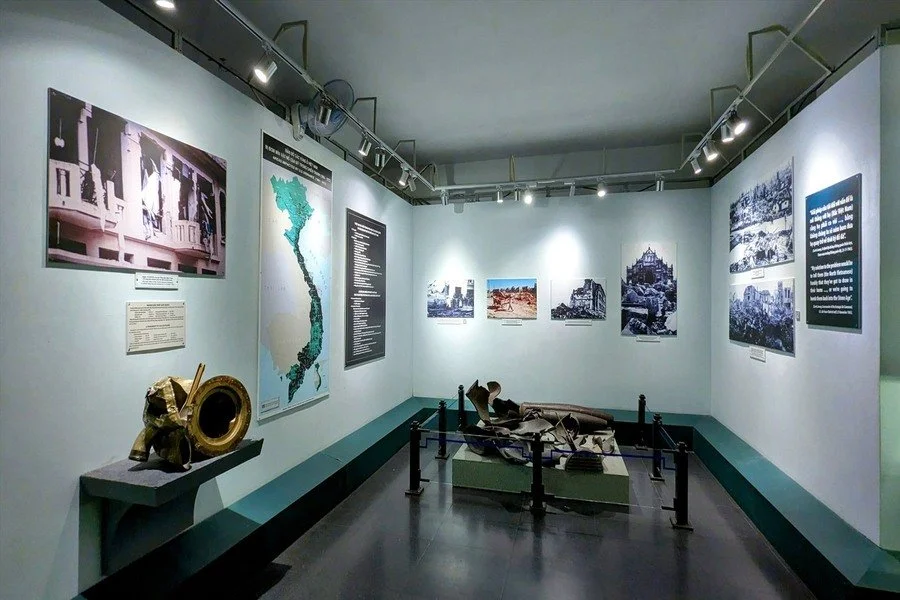
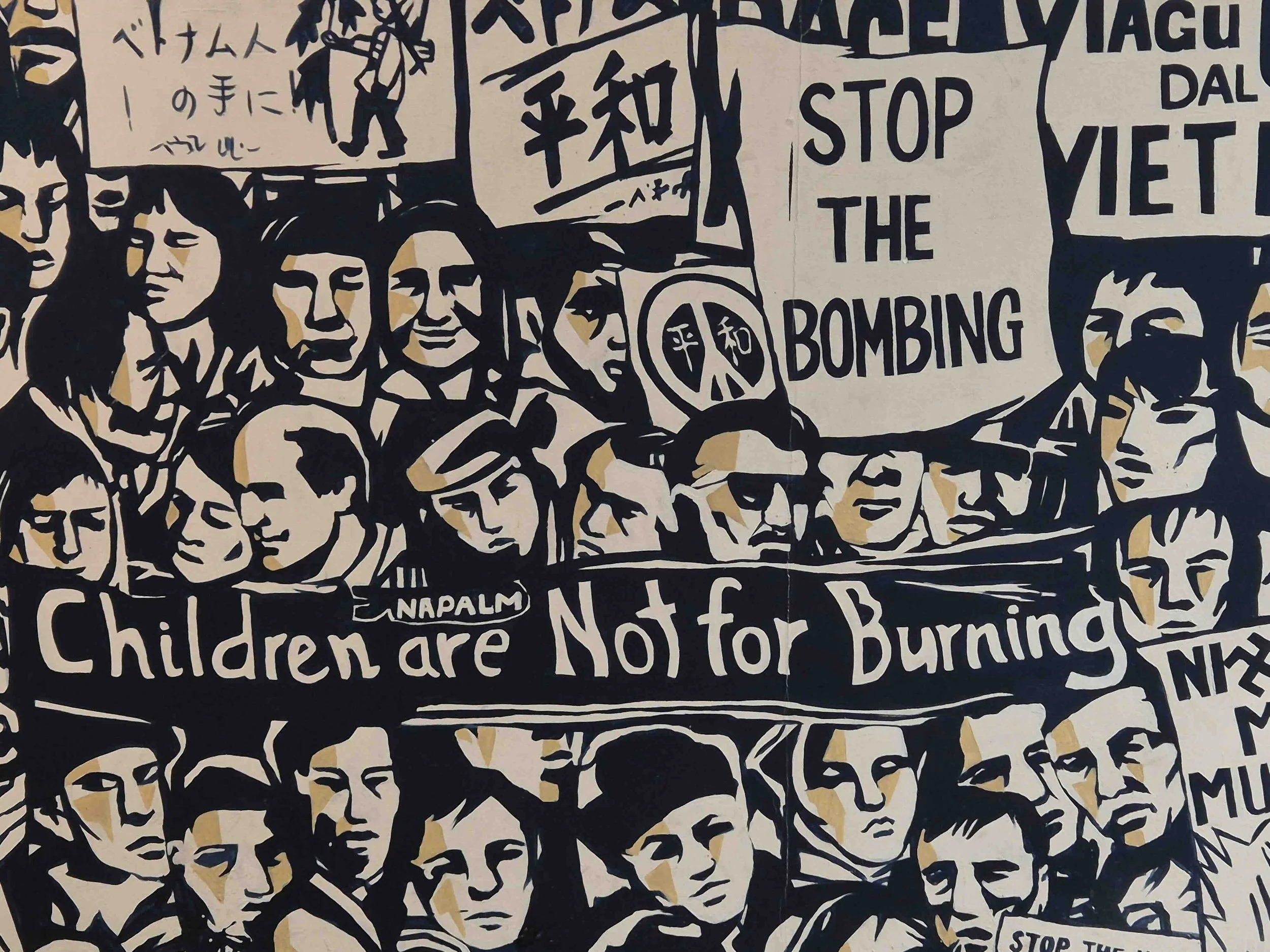
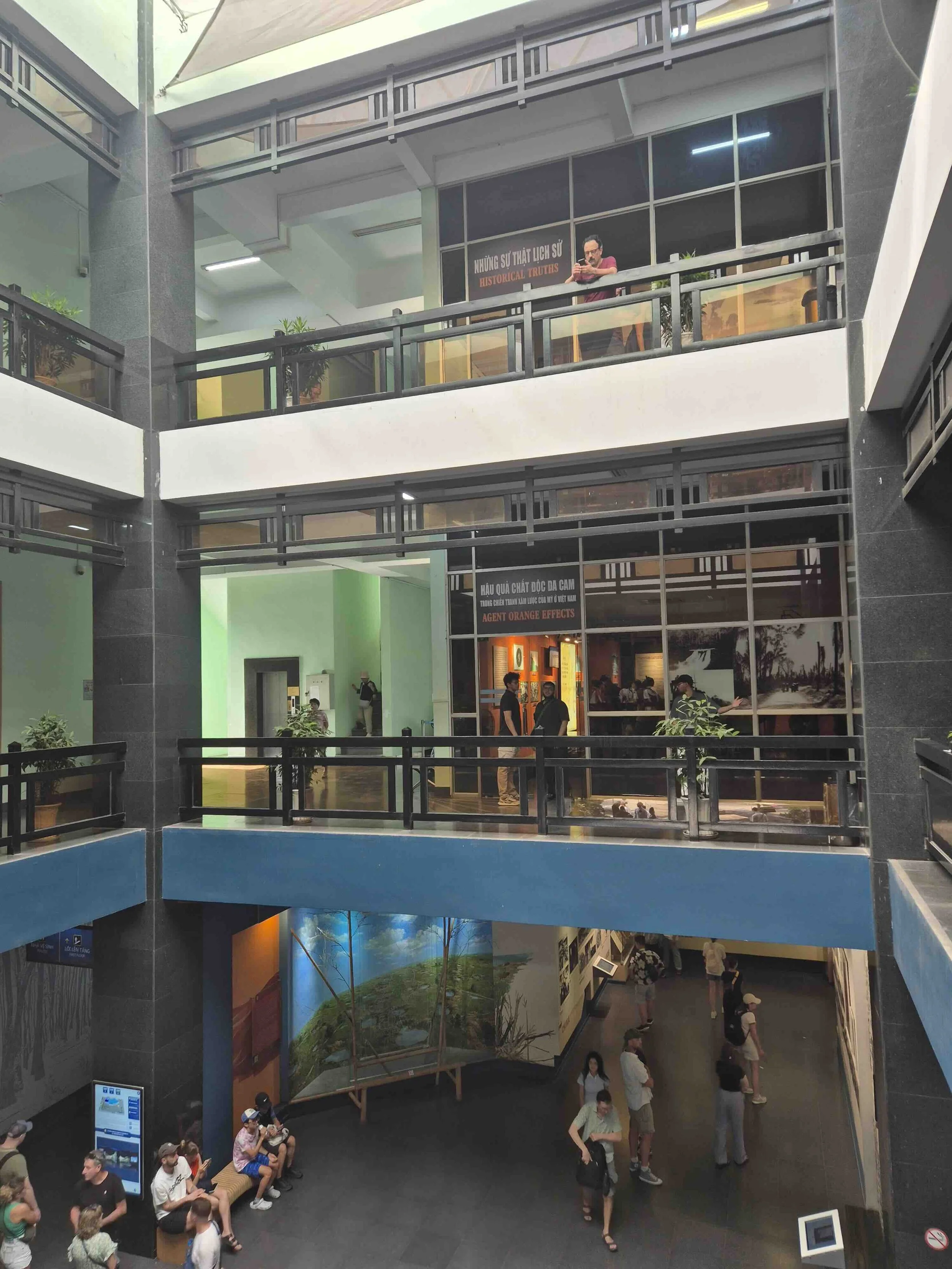
With such a noble mission statement, it was somewhat disconcerting to be confronted on arrival by a souvenir shop, selling fridge magnets, tee shirts, baseball caps and Vietnam War ephemera. Then a themed exhibition ‘The Prison Regime During the War of Aggression in Vietnam,’ revealing the harsh realities faced by Vietnamese political prisoners. Next up was an exhibit entitled ‘War Crimes of the American War of Aggression’ and two rooms devoted to ‘The Consequences of Agent Orange’, one including several of Philip Jones Griffiths’ framed prints. ‘Reminiscence’ is a gallery of photographs by 134 journalists from 11 nationalities who perished reporting on the Indochina War, and finally ‘Historical Facts’ with a display of photographs, documents and artefacts explaining the devastating nature of French colonialism and the American intervention in Vietnam.
A quote from Viet Thanh Nguyen came to mind, from his book Nothing Ever Dies, Vietnam and the Memory of War
“All wars are fought twice, the first time on the battlefield, the second time in memory”
Photography has a unique role to play in memory, one that transcends time and space, as photography captures the tangible and intangible aspects of human experience. What we believe to be true and choose to remember, or to forget, how we ‘memorialise’ war or challenge the audience to confront its consequences, how we make sense of historical and contemporary events, dire as they currently are, remains intrinsically bound up with photography’s role in storytelling.